Your home's drainage infrastructure is largely hidden from view beneath concrete slabs, crawlspaces, and front yards. Because the main sewer line operates silently underground, developing blockages and structural pipe fractures often go unnoticed until contaminated wastewater backs up into living spaces.
Recognizing early warning signs gives homeowners the opportunity to address localized root intrusion, pipe offsets, or grease buildup before an inconvenient slow drain transforms into a devastating blackwater flood. In this guide, our technical plumbing specialists explore the 9 clearest signs of sewer line distress, diagnostic methods, and practical solutions for restoring sanitary flow.
What Is a Sewer Line?
Your property's main sewer lateral is the central subterranean pipe (typically 4 to 6 inches in diameter) that collects all wastewater and solid waste from individual branch drains—including kitchen sinks, laundry machines, showers, and toilets—and channels it out to the municipal sewer main beneath the street.
In Norwalk and across California, property owners are legally responsible for the entire length of the private sewer lateral from the building foundation up to the municipal connection (the "lower lateral"). Understanding how this pipe functions helps clarify why systemic symptoms across multiple fixtures indicate an underground main line issue rather than a simple P-trap clog.
9 Warning Signs of a Sewer Line Problem
If your drainage system is exhibiting one or more of these 9 warning signs, your main sewer lateral is experiencing physical restriction or structural compromise:
1. Multiple Drains Are Slow at the Same Time
When a single bathroom sink empties slowly, the obstruction is almost always localized hair or soap scum in that fixture's P-trap. However, when the kitchen sink, guest bath shower, and master toilet all drain sluggishly at the exact same time, the restriction is located in the central downstream soil stack or underground sewer lateral where all branch lines merge.
2. Drains Keep Backing Up
If clearing a toilet or shower with a hand plunger provides only temporary relief before water starts backing up again within 24 to 48 hours, the blockage is located deeper in the plumbing system. Repeated backups occur when solid waste accumulates against a permanent obstruction—such as tree roots or a crushed pipe section—farther down the lateral.
3. You Notice Sewage or Persistent Sewer Odors
A properly functioning sanitary plumbing system is completely airtight, with water-filled trap seals and roof vent stacks safely directing sewer gases outside. If you notice persistent sulfur, mildew, or rotten-egg odors (hydrogen sulfide) near floor drains, basement sinks, or yard cleanouts, it indicates a cracked sewer pipe, dried trap seal, or decaying waste trapped in the lateral.
4. Toilets Gurgle or Behave Unusually
Do your toilets bubble, glug, or release air when you run the washing machine, take a shower, or empty a kitchen sink? This distinctive gurgling sound occurs when wastewater passing down the pipe encounters a downstream restriction, trapping air pockets that are forced backward through the nearest water trap.
5. Wastewater Comes Back Through a Drain
Wastewater backing up into lower-elevation fixtures—such as dirty water surfacing in a basement shower pan when an upstairs toilet is flushed—is an unequivocal indicator of a main sewer lateral blockage. Gravity forces incoming water to pool behind the obstruction until it spills out of the lowest open drain in the home.
6. You Notice Unusually Wet or Soggy Areas in the Yard
A fractured, dislodged, or root-shattered sewer lateral allows raw wastewater to leach into the surrounding soil. Homeowners may notice mysterious soggy patches, localized ground depression (sinkholes), or a strip of unusually lush, vibrant green grass growing directly above the underground path of the sewer pipe.
7. Plumbing Problems Keep Coming Back
If you find yourself plunging fixtures weekly, applying enzyme treatments constantly, or repeatedly dealing with toilet overflows, treating visible symptoms is no longer effective. Chronic plumbing instability signals a persistent structural defect in the sewer lateral that requires professional intervention.
8. Your Entire Home Seems to Drain Slowly
When water empties with agonizing slowness across every level of your property, the main sewer lateral has lost a substantial percentage of its interior flow diameter. This is commonly caused by extensive tree root mats, calcified mineral scale, or heavy fats, oils, and grease (FOG) accumulation lining the pipe walls.
9. You Keep Needing Drain Cleaning but the Problem Returns
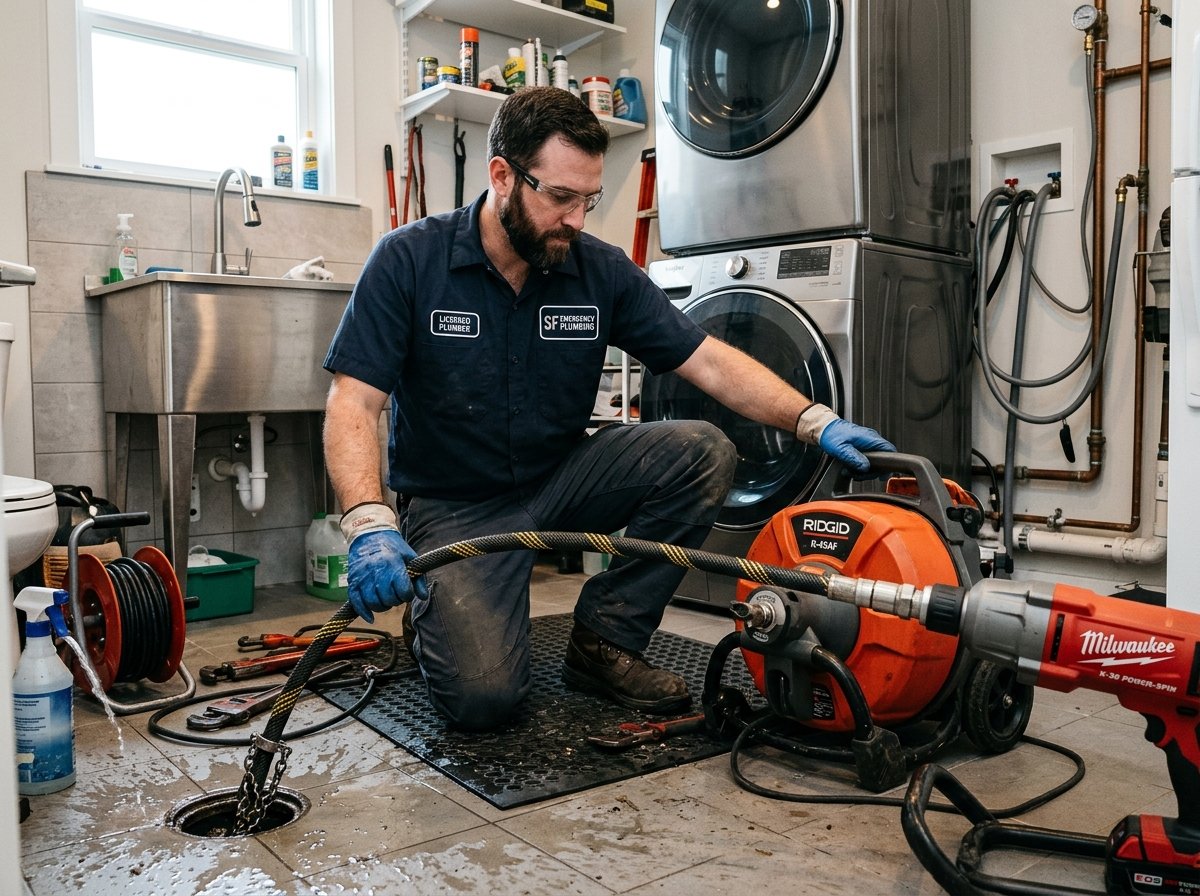
Having a drain technician snake your line only to have the exact same blockage return weeks later typically means mechanical cabling is merely punching a temporary small hole through a dense root mass or collapsed pipe section rather than clearing the full diameter. A comprehensive sewer line repair or hydro-jetting is necessary to resolve the root cause.
Diagnostic Symptom Comparison Table
Use this quick reference guide to distinguish minor localized clogs from serious subterranean sewer lateral emergencies:
Suspecting a Sewer Line Problem in Norwalk?
Don't wait for a partial restriction to turn into a full biohazard flood. Our licensed emergency plumbers carry fiber-optic video inspection cameras and commercial root-clearing equipment to diagnose and repair sewer lines fast.
What Causes Sewer Line Problems?
Underground sewer pipes are exposed to harsh subterranean environments, environmental shifts, and continuous daily hydraulic wear:
- Aggressive Tree Root Infiltration: Moisture vapor leaking from pipe joints attracts microscopic tree root hair. As roots feed inside the pipe, they expand into dense wooden masses that crack vitrified clay lines and block all outgoing solids.
- Cast Iron Channel Corrosion & Scaling: Decades of acidic wastewater eat away the bottom invert of cast iron pipes (channel rot), creating rough surfaces that snag toilet paper and waste.
- Ground Settling & Seismic Offsets: Natural ground shifts and minor seismic activity can cause rigid pipe sections to misalign at joint collars (pipe offsets) or develop severe sags ("bellies") where wastewater and solids pool continuously.
- Flushing Non-Dispersible Foreign Items: Wipes marketed as "flushable", baby wipes, paper towels, and sanitary products do not dissolve in water, acting as reinforcement binding grease and solids together.
- Heavy Fats, Oils, and Grease (FOG): Liquified kitchen fats solidify along the cold pipe interior, steadily narrowing the effective flow diameter over time.
Sewer Line Problems in Norwalk Homes
Norwalk's architectural heritage and unique municipal infrastructure create distinctive sewer maintenance challenges:
Many residential homes and multi-unit flats in neighborhoods like the Santa Fe Springs, Bellflower, and La Mirada retain original vitrified clay or unlined cast iron laterals installed over 70 to 100 years ago. In dense multi-flat residences, shared vertical waste stacks mean a single lower lateral defect can trigger simultaneous sewage backups across multiple separate households.
Furthermore, Norwalk operates a combined sewer system overseen by the Norwalk Public Utilities Commission (Norwalk Water Division), where urban stormwater runoff and sanitary sewage share the same street mains. During intense winter storm events, low-lying neighborhoods such as the Downey and Downtown Norwalk can experience municipal main surcharge, underscoring the vital importance of functional backwater valves and proactive camera inspections.
Is a Sewer Line Problem a Plumbing Emergency?
A sewer line problem escalates to an urgent plumbing emergency when active wastewater enters living spaces. According to IICRC S500 standards, raw sewage is classified as Category 3 Blackwater, containing hazardous biological pathogens such as E. coli, Salmonella, and enteric viruses.
Treat the situation as an immediate emergency when:
- Sewage is backing up into bathtubs, showers, or floor drains.
- Multiple toilets across the building are overflowing or inoperable.
- Water is escaping past bathroom baseboards into subflooring or ceilings below.
- Pungent sewer gas is spreading through interior living areas.
What Should You Do If You Suspect a Sewer Problem?
If your home is exhibiting signs of sewer lateral distress, follow these immediate protective measures:
- Cease All Water Usage: Do not run dishwashers, washing machines, showers, or faucets. Any water added to the drainage system will directly contribute to standing backups.
- Do Not Flush Toilets: Avoid attempting to "force" clogs through with repeated flushes; this guarantees an overflow onto bathroom flooring.
- Avoid Caustic Chemical Cleaners: Liquid chemical drain openers cannot dissolve heavy tree roots or broken pipe segments and leave hazardous caustic chemicals standing in your fixtures.
- Locate Your Main Sewer Cleanout: Knowing where your cleanout cap is positioned in your basement, garage, or front yard speeds up diagnostic access for arriving technicians.
- Contact a Licensed Emergency Plumber: Request a comprehensive video camera inspection to locate the exact source and depth of the issue.
How Do Plumbers Find a Sewer Line Problem?
Modern plumbing diagnostics eliminate guesswork through systematic inspection protocols:
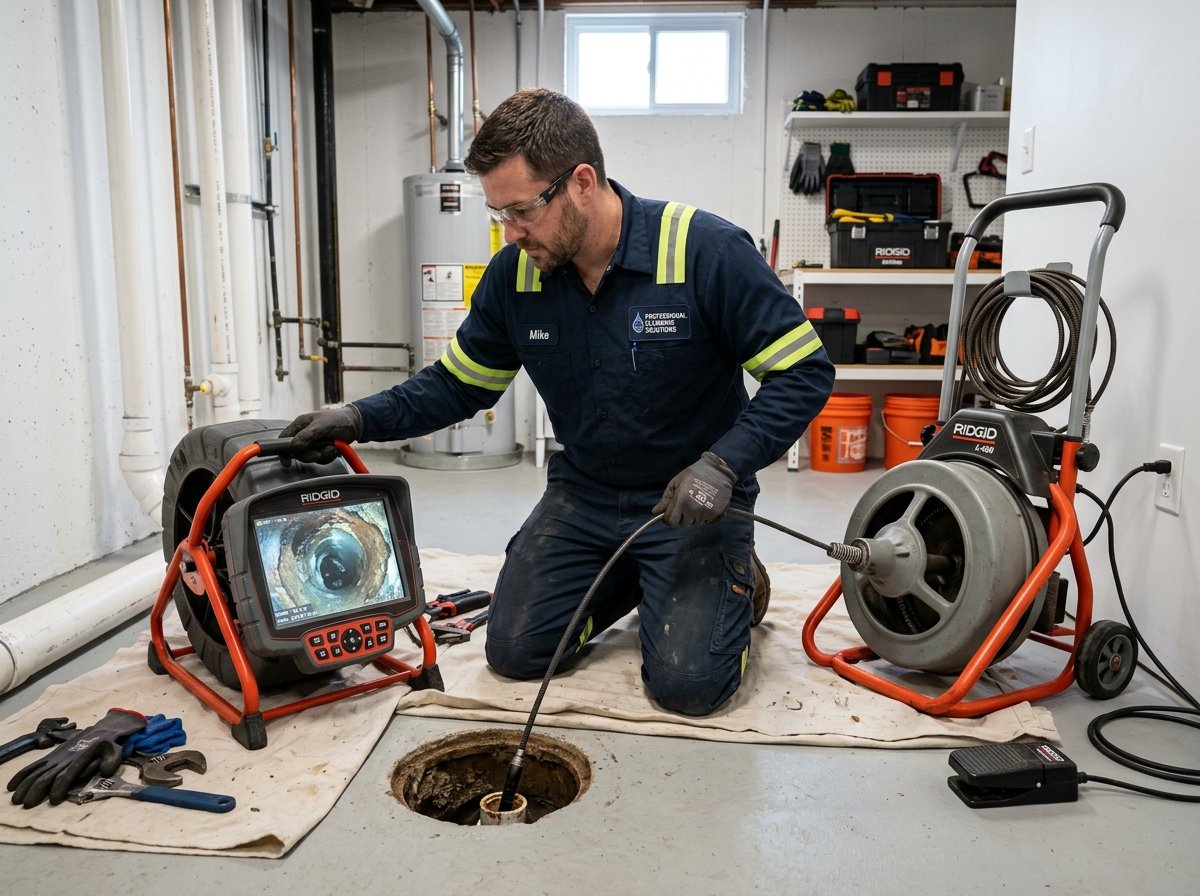
High-Definition Sewer Camera Inspection: A technician feeds a specialized waterproof, self-leveling fiber-optic video camera through your cleanout access point down the entire length of the lateral to the city connection. The high-resolution monitor reveals the exact condition of the pipe interior in real time—identifying tree root intrusions, cracked joints, pipe bellies, and collapsed sections while recording precise footage and depth measurements.
Sewer Line Repair vs. Replacement: What's the Difference?
Depending on camera inspection findings, plumbers recommend targeted repairs or full lateral replacement:
- Motorized Snaking & Hydro-Jetting: For intact pipes suffering from heavy grease buildup or light root intrusion, mechanical augering or 4,000 PSI high-pressure hydro-jetting scours the pipe walls back to original flow diameter.
- Trenchless CIPP Pipe Relining: If the pipe has minor cracks or root-damaged joints but remains structurally intact, Cured-in-Place Pipe (CIPP) relining inserts an epoxy-saturated sleeve inside the old pipe, curing into a smooth, seamless "pipe within a pipe" without digging up yards or driveways.
- Pipe Bursting (Trenchless Replacement): A hydraulic expander head pulls a brand-new seamless high-density polyethylene (HDPE) pipe through the damaged host pipe, fracturing the old line outward while laying the new lateral simultaneously.
- Traditional Open-Trench Excavation: When a sewer lateral has fully collapsed, severe back-pitch sags exist, or municipal connections require structural reconfiguration, targeted excavation and replacement with schedule 40 PVC or heavy cast iron restores permanent reliability.
Understanding Sewer Line Repair Costs
The cost of professional sewer line repair or replacement varies considerably based on several technical factors:
- Depth and Location of the Pipe: Shallow yard lines are significantly easier to access than laterals buried 8 to 12 feet beneath concrete driveways, city sidewalks, or building foundations.
- Extent of Structural Damage: A localized root intrusion cleared via hydro-jetting costs substantially less than rehabilitating an entire 60-foot collapsed lateral.
- Chosen Repair Methodology: Trenchless CIPP relining or pipe bursting avoids extensive surface restoration costs (concrete repaving, landscaping repair) compared to open-trench excavation.
- Municipal Permitting & Street Excavation: Lower lateral work extending into the public street right-of-way requires municipal permits and traffic control plans.
Because every residential property configuration is unique, a preliminary sewer camera inspection is the only accurate way to obtain an honest, comprehensive scope of work.
How to Help Prevent Sewer Line Problems
Protect your private sewer lateral with these routine preventative practices:
- Never flush unflushable wipes: Discard all wipes, paper towels, facial tissues, and hygiene items in the trash.
- Dispose of cooking fats properly: Pour kitchen grease and pan drippings into cans rather than washing them down kitchen sinks.
- Plant trees thoughtfully: Avoid planting fast-growing, water-seeking trees (like willows, ficus, or eucalyptus) directly above underground sewer runs.
- Schedule periodic camera checkups: If your property is more than 40 years old, having a video inspection every 2 to 3 years catches minor joint separation before it causes an emergency.
Frequently Asked Questions
The earliest indicators are subtle: multiple drains running slightly slow simultaneously, occasional bubbling or gurgling sounds from toilet bowls, and faint sewer odors near basement floor drains.
If only one fixture is slow, it is an isolated drain trap clog. If using one fixture causes water to back up into another (e.g., flushing a toilet causes water to rise in the shower), the obstruction is in the main sewer lateral.
Yes. Mechanical snaking cuts away root masses inside the pipe, but tree roots will continue growing back through the unsealed pipe cracks within months unless the pipe is permanently relined or replaced.
High-resolution sewer cameras reveal root intrusion, pipe offsets, cracks, bellies, grease accumulation, and structural collapses in real time, though lines full of dark, standing wastewater must first be cleared so the camera lens has visibility.
In Norwalk, property owners are responsible for maintaining and repairing the upper and lower private sewer lateral connecting the home to the municipal sewer main under the street.
It is an active emergency if wastewater is actively backing up into showers, tubs, or toilets, sewage odors are overpowering living spaces, or water is leaking into subflooring or lower-level units.
Trenchless sewer repair (such as CIPP pipe relining or pipe bursting) rehabilitates or replaces underground sewer lines with minimal digging, creating a new structural pipe inside the old host line without destroying driveways or landscaping.
Final Takeaway & Professional Next Steps
A sewer line problem is not a minor inconvenience—it is a progressive structural failure that can quickly cause thousands of dollars in contaminated water damage if ignored. If you notice multiple slow drains, gurgling toilets, or recurring backups, stop using water and arrange a professional sewer camera diagnostic inspection. Identifying the precise location and nature of the defect will protect your home, your family's health, and your plumbing investment.
Suspecting a Sewer Line Problem in Norwalk?
Don't wait for raw sewage to back up into your home. Our licensed emergency plumbers provide 24/7 video camera diagnostics, motorized snaking, hydro-jetting, and sewer line repair across Norwalk.
- California Plumbing Code (Title 24, Part 5, Chapter 7) – Sanitary Drainage & Sewer Laterals
- Institute of Inspection, Cleaning and Restoration Certification (IICRC S500) – Category 3 Blackwater Remediation
- Norwalk Public Utilities Commission (Norwalk Water Division) – Lateral Maintenance & Watershed Protection Standards