
Discovering dirty water, toilet paper, or contaminated wastewater backing up into your bathroom sinks, bathtub basins, or basement floor drains is an alarming experience. Unlike a standard clogged sink, a sewer backup represents a systemic failure of your building's primary drainage path. Identifying the true root cause is critical because simply plunging an overflowing toilet or applying chemical cleaners will not resolve an obstructed or broken subterranean sewer lateral.
In this emergency homeowner guide, our technical plumbing specialists explore the common causes of sewer backups, how to recognize early warning signs, the immediate steps to contain contamination, and the diagnostic methods used to permanently restore your sanitary drainage.
1. What Is a Sewer Backup?
Under normal operating conditions, all plumbing fixtures in your home—including toilets, showers, sinks, and laundry lines—discharge graywater and blackwater into secondary branch pipes. These branch lines converge into a central vertical soil stack, which exits the building foundation into the private sewer lateral (a 4-inch to 6-inch underground pipe connecting your property to the municipal sewer main beneath the street).
When a physical obstruction or structural failure dams the sewer lateral, outgoing wastewater has nowhere to go. Because plumbing drainage relies on natural gravity, water begins pooling within the pipe. As upper-floor fixtures continue to be used, incoming volume fills the pipe from the blockage point upward, forcing contaminated sewage to erupt out of the lowest elevation fixtures in the structure.
Local Drain Clog vs. Main Sewer Backup
- Local Drain Clog: Confined strictly to a single fixture (e.g., hair in a shower P-trap). Other sinks, tubs, and toilets across the house drain smoothly and quietly.
- Main Sewer Backup: Affects multiple fixtures simultaneously. Flushing an upstairs toilet causes wastewater or bubbles to rise in downstairs showers or floor drains.
2. What Causes a Sewer Backup?
Sewer backups rarely happen without warning; they are typically the result of physical accumulation or structural deterioration within the subterranean lateral line:
Blocked Sewer Line (Foreign Objects & Wipes)
Flushing non-dispersible materials—such as so-called "flushable" wipes, baby wipes, feminine hygiene products, facial tissues, paper towels, and dental floss—creates dense fibrous obstructions. These materials do not break down in water like standard toilet paper; instead, they snag on rough pipe joints and accumulate into impenetrable dams.
Tree Root Intrusion
Tree roots are naturally drawn to the moisture, warmth, and nutrient-rich vapor escaping from micro-cracks and joint seals in underground sewer pipes. Once fine root hairs penetrate vitrified clay or cast iron lines, they expand rapidly inside the pipe cavity, creating dense root mats that catch solid waste and completely block drainage.
Fats, Oils, and Grease (FOG) Accumulation
Pouring liquefied cooking oils, pan grease, and meat drippings down kitchen drains is a leading cause of sewer lateral failure. While warm grease flows easily through sink P-traps, it cools and solidifies along the interior walls of underground lateral lines, progressively choking the pipe diameter like plaque in an artery.
Damaged, Cracked, or Collapsed Sewer Pipes
Underground sewer pipes are subjected to continuous soil shifting, seismic ground movement, vehicular traffic loads, and natural material fatigue. Over decades, older cast iron pipes suffer bottom-channel corrosion (channel rot), while clay pipes can fracture, dislodge at joints (offset joints), or completely collapse under soil pressure.
Aging Municipal and Private Infrastructure
Many historic properties feature lateral lines installed 50 to 100 years ago using materials that have reached the end of their operational lifespans. As interior surfaces become rough and pitted with rust or mineral scaling, solids catch easily, accelerating backup frequency.
Severe Rainstorms & Municipal Surcharges
During extreme weather events, stormwater runoff entering municipal sewer systems can exceed the capacity of city mains. When street sewer lines become fully surcharged with rainwater and wastewater, backpressure can force liquid backward into residential laterals that lack properly maintained backwater prevention valves.
3. Warning Signs of a Sewer Line Problem
Recognizing subtle early indicators of sewer lateral distress can help you address a developing blockage before raw sewage floods your living areas:
Multiple Simultaneous Slow Drains
When sinks, bathtubs, and toilets across different rooms all drain sluggishly at the same time, the restriction is in the main trunk line, not individual traps.
Gurgling Fixtures & Trapped Air
Hearing bubbling or glugging sounds from your toilet bowl or bathtub drain when running the washing machine indicates displaced air trapped by a downstream blockage.
Foul Sewer Gas Odors
Smelling persistent rotten-egg odors (hydrogen sulfide) near floor drains, basement sinks, or yard cleanouts signals that waste is stagnating or trap seals are being siphoned dry.
Water Rising in Shower During Flush
Flushing a toilet and watching dirty water immediately rise into the adjacent shower or tub pan is a classic hallmark of a blocked secondary or main sewer line.
Experiencing a Sewer Backup in Norwalk?
Don't let contaminated wastewater flood your home. Our licensed emergency plumbers provide 24/7 motorized snaking, high-definition sewer camera inspections, and emergency sewer lateral repairs across Norwalk.
4. What to Do During a Sewer Backup (6-Step Protocol)
If wastewater begins backing up into your fixtures or floor drains, follow this 6-step emergency response protocol immediately:
What To Do During a Sewer Backup — 6 Steps
Step 1: Stop Using All Water Immediately
Do not run faucets, showers, dishwashers, or laundry machines. Any water introduced into your plumbing system will have nowhere to go and will immediately spill out into your lowest drains.
Step 2: Keep People and Pets Away
Raw sewage contains harmful bacteria, viruses, and pathogens. Quarantine affected bathrooms, laundry rooms, or basements to prevent tracking biohazards into clean living areas.
Step 3: Avoid Direct Contact with Wastewater
If you must enter the room, wear protective rubber boots, heavy-duty gloves, and protective eyewear. Wash and disinfect any exposed skin thoroughly.
Step 4: Protect Nearby Belongings Safely
If you can safely reach dry storage items, rugs, or furniture without stepping into contaminated standing water, move them to higher ground to minimize property loss.
Step 5: Call a Licensed Emergency Plumber
Contact a plumbing professional equipped with heavy-duty sectional sewer equipment and fiber-optic video cameras to locate and clear the obstruction.
Step 6: Document the Damage for Insurance
Take clear photographs and videos of the affected fixtures, standing water levels, and damaged property before cleanup begins to support homeowner insurance claims.
If standing wastewater has reached electrical outlets, extension cords, baseboard heaters, or your electrical panel, do not enter the water. Evacuate the area immediately and contact your utility provider or a licensed professional.
5. Is a Sewer Backup an Emergency?
Yes. A sewer backup should always be treated as an urgent plumbing and environmental health emergency when:
- Category 3 Blackwater Contamination: According to the Institute of Inspection, Cleaning and Restoration Certification (IICRC S500 standards), raw sewage is classified as Category 3 water containing dangerous pathogens, including E. coli, Salmonella, hepatitis, and parasites that pose immediate health hazards.
- Structural Water Damage: Wastewater rapidly saturates drywall, wood floor framing, subflooring, and insulation, creating irreversible rot and toxic mold growth within 24 to 48 hours.
- Multi-Unit Spread: In multi-family flats, condominiums, and apartment buildings, an unaddressed main sewer line backup can push sewage into neighboring or lower-floor units.
However, a single sink draining slowly without gurgling or wastewater backflow is typically an isolated clog that can be evaluated during standard service hours.
6. What NOT to Do During a Sewer Backup
When dealing with a stressful sewer backup, avoiding common mistakes can prevent compounding your property damage:
- DO NOT keep running water: Avoid the temptation to test whether other sinks or toilets work, as every gallon introduced will bubble out into the flooded area.
- DO NOT repeatedly flush toilets: Plunging an overflowing toilet connected to a blocked main line will simply force wastewater out through the shower drain.
- DO NOT pour chemical drain cleaners: Caustic liquid drain cleaners are ineffective against dense sewer lateral obstructions (such as tree roots or collapsed pipes) and leave corrosive, hazardous chemicals sitting in your flooded fixtures.
- DO NOT ignore recurring slow drains: Repeatedly clearing localized traps with a hand plunger without investigating the main line often leads to a sudden, catastrophic flood later.
- DO NOT attempt to clean raw sewage without PPE: Never use a standard household vacuum or clean sewage barefoot. Professional biohazard remediation is recommended for significant spills.
7. How Plumbers Diagnose a Sewer Backup
Licensed emergency plumbers employ systematic diagnostic procedures to pinpoint the exact location and nature of the obstruction:
Initial Visual & Fixture Assessment
The technician assesses which fixtures are backing up, checks water levels at the lowest drains, and examines the building's exterior or basement sewer cleanouts to determine if the blockage is inside the structure or outdoors in the yard lateral.
Cleanout Access & Relieving Backpressure
Technicians access the primary building cleanout (a capped pipe opening that provides direct access to the main lateral). Carefully opening the cleanout allows technicians to relieve standing pressure and insert diagnostic and clearing equipment.
High-Definition Sewer Camera Inspection
A specialized waterproof, self-leveling fiber-optic video camera attached to a flexible push rod is guided down the entire length of the sewer line to the city connection. Real-time video footage reveals the exact depth, location, and nature of the failure—whether it is root invasion, grease buildup, a belly in the pipe, or a total structural collapse.
8. Sewer Backup Repair Options
Depending on camera inspection findings, professional plumbing solutions range from immediate clearing to permanent structural rehabilitation:
Motorized Mechanical Snaking (Augering)
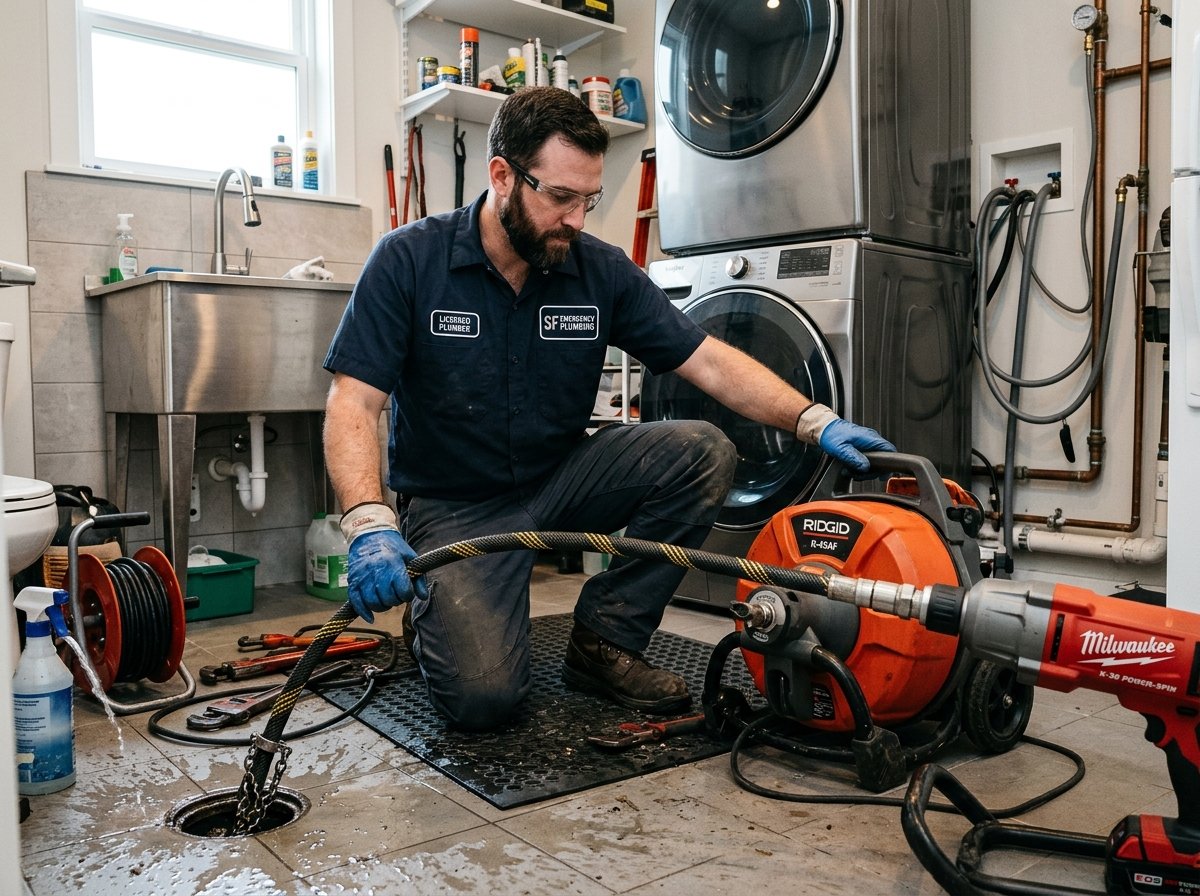
Heavy-duty commercial drain machines equipped with specialized steel cutting heads bore through solid obstructions, wet wipes, and light root hair to rapidly restore basic flow.
Hydro-Jetting (High-Pressure Pipe Scouring)
Utilizing high-pressure water streams (up to 4,000 PSI), hydro-jetting obliterates heavy grease deposits, calcified mineral scale, and stubborn tree roots, thoroughly scouring the interior walls back to original flow diameter.
Trenchless Sewer Repair & Pipe Relining (CIPP)
For cracked, root-damaged, or deteriorating pipes, cured-in-place pipe (CIPP) lining inserts an epoxy-saturated resin sleeve inside the existing pipe, creating a smooth, seamless new structural pipe without digging up driveways or landscaping.
Open-Trench Pipe Section Replacement
When a section of sewer line is completely collapsed, crushed by heavy root masses, or severely misaligned, targeted excavation and replacement with modern schedule 40 PVC or cast iron restores permanent integrity.
9. How to Prevent Future Sewer Backups
Preventative maintenance is the most cost-effective way to protect your property against sewer disasters:
- Adopt the "Three Ps" Rule: Only flush Pee, Poo, and Toilet Paper. Never flush baby wipes, feminine hygiene products, dental floss, or grease.
- Collect Cooking Grease: Pour pan grease, tallow, and oils into sealable containers to discard in the trash rather than washing them down kitchen sinks.
- Install a Sewer Backwater Valve: A code-compliant backwater check valve allows outgoing sewage to exit your property while automatically sealing shut if municipal sewer lines experience reverse backpressure.
- Schedule Periodic Video Inspections: For properties over 40 years old or those with mature trees on the property, an annual or biennial camera inspection can identify minor root intrusion before it causes a full blockage.
- Keep Cleanout Caps Accessible: Ensure exterior and basement sewer cleanouts are never buried beneath concrete, drywall, or heavy landscaping.
10. Sewer Backup Problems in Norwalk Properties
Norwalk's unique architectural landscape and municipal infrastructure present distinct drainage considerations for property owners:
In residential homes and multi-unit buildings located in neighborhoods like the Santa Fe Springs, Bellflower, and La Mirada, older vitrified clay and unlined cast iron laterals have endured decades of seismic ground settlement. In multi-flat residential layouts, waste lines frequently tie into shared vertical soil stacks where a main-floor obstruction impacts multiple tenancies.
Additionally, Norwalk operates a combined sewer system managed by the Norwalk Public Utilities Commission (Norwalk Water Division), where street stormwater runoff and sanitary sewage share common municipal collector mains. In low-elevation and coastal zones like the Downey and Downtown Norwalk, intense atmospheric river storm events can place surcharge pressure on municipal mains, highlighting the importance of backwater prevention valves and routine maintenance.
11. When to Call an Emergency Plumber
Contact a licensed emergency plumbing professional immediately if you observe:
- Wastewater backing up into bathtubs, showers, or floor drains.
- Multiple plumbing fixtures across the building failing simultaneously.
- Sewage odors persisting despite clean water fixtures.
- Water overflowing past the toilet bowl or bathroom baseboards.
- You need fast emergency sewer repair in Norwalk, motorized snaking, or a video diagnostic camera inspection.
12. Frequently Asked Questions
The most common causes are tree root intrusion into underground pipes, accumulation of unflushable wipes and fats/oils/grease (FOG), physical pipe breaks or collapses, and severe municipal storm surcharges.
If only one sink is slow, it is an isolated drain trap clog. If multiple fixtures (like a toilet and shower) back up simultaneously or gurgle when water is run elsewhere, the restriction is in the main sewer lateral.
Standard homeowners insurance policies frequently exclude sewer backups unless you have added an optional "Water Backup and Sump Overflow" endorsement rider. Check with your insurance provider to confirm coverage.
Yes. Microscopic tree root hairs penetrate hairline cracks or rubber joint gaskets seeking moisture and nutrients. As roots grow within the pipe, they expand into dense root masses that shatter clay pipes and catch solid waste.
Stop running all water in the building immediately. Keep all family members and pets away from contaminated areas, avoid electrical panels or flooded outlets, and call a licensed emergency plumber for immediate dispatch.
A plumber inserts a high-resolution, waterproof camera on a flexible fiber-optic push cable into your cleanout. The camera transmits live video footage to a monitor, allowing the technician to inspect pipe conditions, locate blockages, and measure exact distance without digging.
Yes. Industrial hydro-jetters equipped with rotating root-cutting nozzles blast water at up to 4,000 PSI to slice through dense root intrusions and thoroughly scour grease and mineral scale from the pipe interior.
13. Final Takeaway
A sewer backup is a critical plumbing emergency that threatens structural integrity, sanitation, and indoor air quality. By stopping all water usage immediately, maintaining distance from contaminated blackwater, and obtaining a professional sewer camera diagnosis, you can resolve the underlying cause and protect your Norwalk property from devastating water damage.
Dealing With a Sewer Backup in Norwalk?
If wastewater is backing up into your home or multiple drains are gurgling, don't wait for the situation to escalate. Our licensed emergency plumbing team provides 24/7 emergency dispatch, video camera diagnostics, and sewer repair across Norwalk.
- California Plumbing Code (Title 24, Part 5, Chapter 7) – Sanitary Drainage Systems
- Institute of Inspection, Cleaning and Restoration Certification (IICRC S500) – Standard for Professional Water Damage Restoration (Category 3 Blackwater Protocols)
- Norwalk Public Utilities Commission (Norwalk Water Division) – Urban Watershed & Sewer Lateral Management Guidelines