Why Is My Drain Clogged?
Before picking a solution, it helps to understand what is causing the restriction. Drain blockages rarely occur instantaneously; rather, materials gradually accumulate along the interior walls of your drainpipes until water flow slows to a crawl or stops entirely.
The most common culprits include:
- Hair and Pet Fur: The primary cause of bathroom sink, tub, and shower clogs. Strands bind together with soap scum to form dense, fibrous mats inside drain strainers and pop-up assemblies.
- Fats, Oils, and Grease (FOG): In kitchen sinks, cooking grease poured down the drain solidifies as it cools, catching food scraps and narrowing the pipe's internal diameter.
- Soap Scum & Mineral Deposits: Hard water minerals combine with fatty acids in bar soaps to create a sticky coating (talc/lime buildup) inside pipe walls.
- Foreign Objects & "Flushable" Wipes: Wet wipes, dental floss, cotton swabs, and paper towels do not disintegrate like toilet paper and create stubborn physical snags.
- Tree Root Intrusion: In older Norwalk neighborhoods with mature street trees, fine roots penetrate subterranean clay sewer laterals seeking moisture, trapping waste inside main drainage branches.
7 Ways to Unclog a Drain
Work through these practical homeowner methods from simplest to most advanced. Always stop if you encounter severe resistance to avoid damaging your plumbing fixtures or pipes.
1. Remove Visible Surface Debris
Many bathroom clogs are located within the top two inches of the drain opening. Put on rubber gloves, unscrew or lift the drain stopper/cover, and use a small flexible plastic drain claw or bent wire hanger to pull out tangled hair, soap residue, and lint. Clean the stopper mechanism thoroughly before reinserting it.
2. Flush with Hot Tap Water (When Appropriate)
For kitchen sink grease or bathroom soap residue, running very hot tap water (or carefully pouring hot kettle water that has cooled slightly off the boil) can liquefy grease and soften soap binders. Note: Never pour rolling boiling water into porcelain toilet bowls or thin PVC plastic pipes, as rapid thermal shock can crack porcelain or soften pipe cement joints.
3. Use the Correct Plunger and Technique
Use a standard flat-cup plunger for flat sink and tub basins (reserve flange plungers for curved toilet bowls). Cover the overflow opening with a damp washcloth or tape to ensure pressure is directed down the drain rather than escaping out the vent. Add 1–2 inches of water to cover the plunger cup rim, seal the cup firmly over the drain opening, and plunge vigorously up and down with 10–15 rhythmic strokes before popping the seal off quickly.
4. Clean the Under-Sink P-Trap
The curved pipe beneath your kitchen or bathroom sink (the P-trap) is designed to hold water and block sewer gases, but it also traps heavy objects, grease, and hair. Place a bucket and towels directly beneath the trap. Loosen the two slip-joint nuts by hand or with channel-lock pliers. Carefully drop the trap assembly, empty trapped sludge into your bucket, brush it clean with a bottle brush, inspect the rubber slip washers, and reinstall snugly without over-tightening.
5. Use a Manual Hand Auger (Drain Snake)
If the blockage is located deeper in the branch line past the P-trap, a 15-to-25-foot manual hand snake is an effective tool. Feed the coiled steel cable down the drain or through the wall cleanout until you feel resistance. Rotate the hand crank clockwise with gentle forward pressure to snag or break apart the blockage. Slowly retrieve the cable while wiping it down with a rag, and discard any retrieved debris.
6. Flush the Drain with Warm Water to Test Flow
After retrieving or breaking up a clog, run warm tap water for 2 to 3 minutes. This flushes dislodged particulate through the larger building main drain rather than allowing loose debris to resettle a few feet downstream. Observe the drainage rate: if water creates a strong central vortex (swirl), the branch is fully clear.
7. Know When to Stop DIY Attempts
If plunging produces no results, the snake binds repeatedly, water backs up into adjacent fixtures (like tub water rising when the toilet is flushed), or you smell pungent sewer gas, stop immediately. Continuing to force tools into stuck lines can puncture old cast iron pipes, crack brittle plastic fittings, or push blockages deeper into building main stacks.
Stubborn Drain That Refuses to Clear?
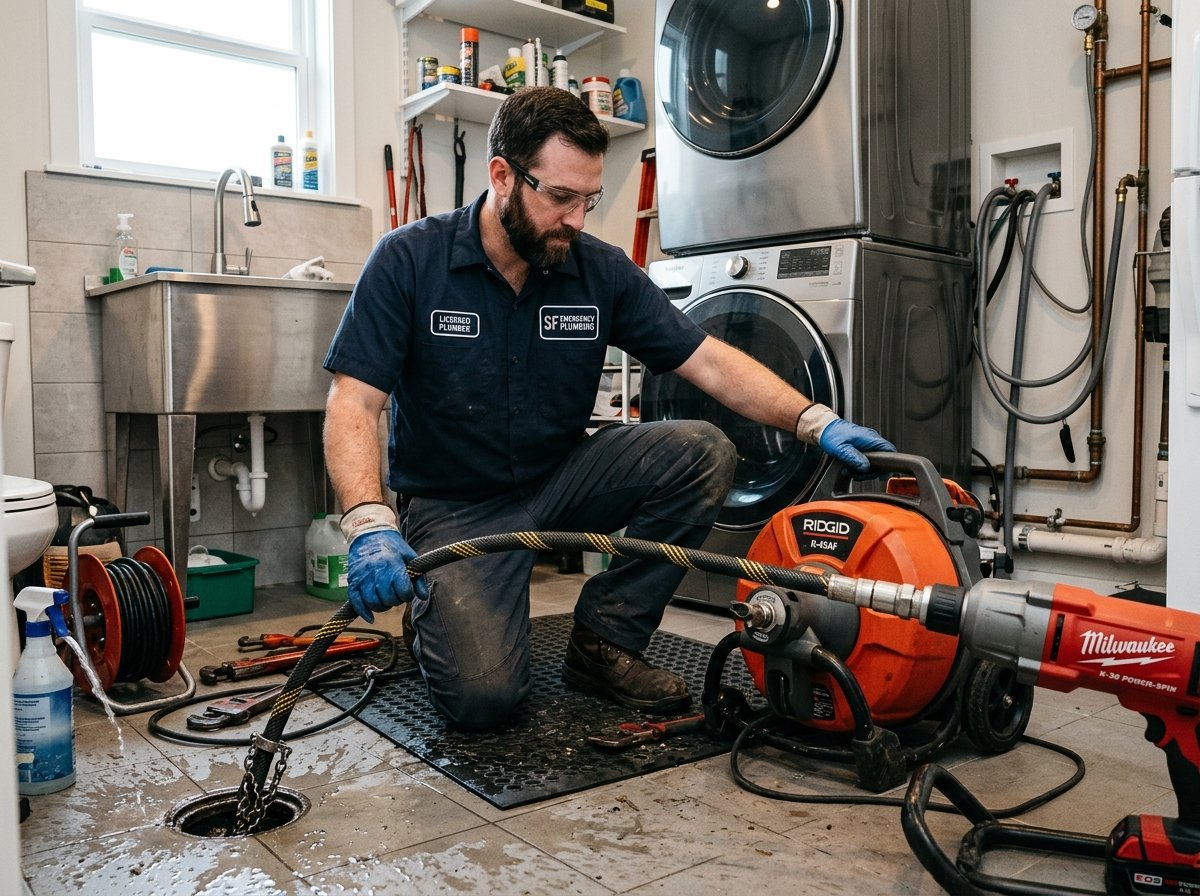
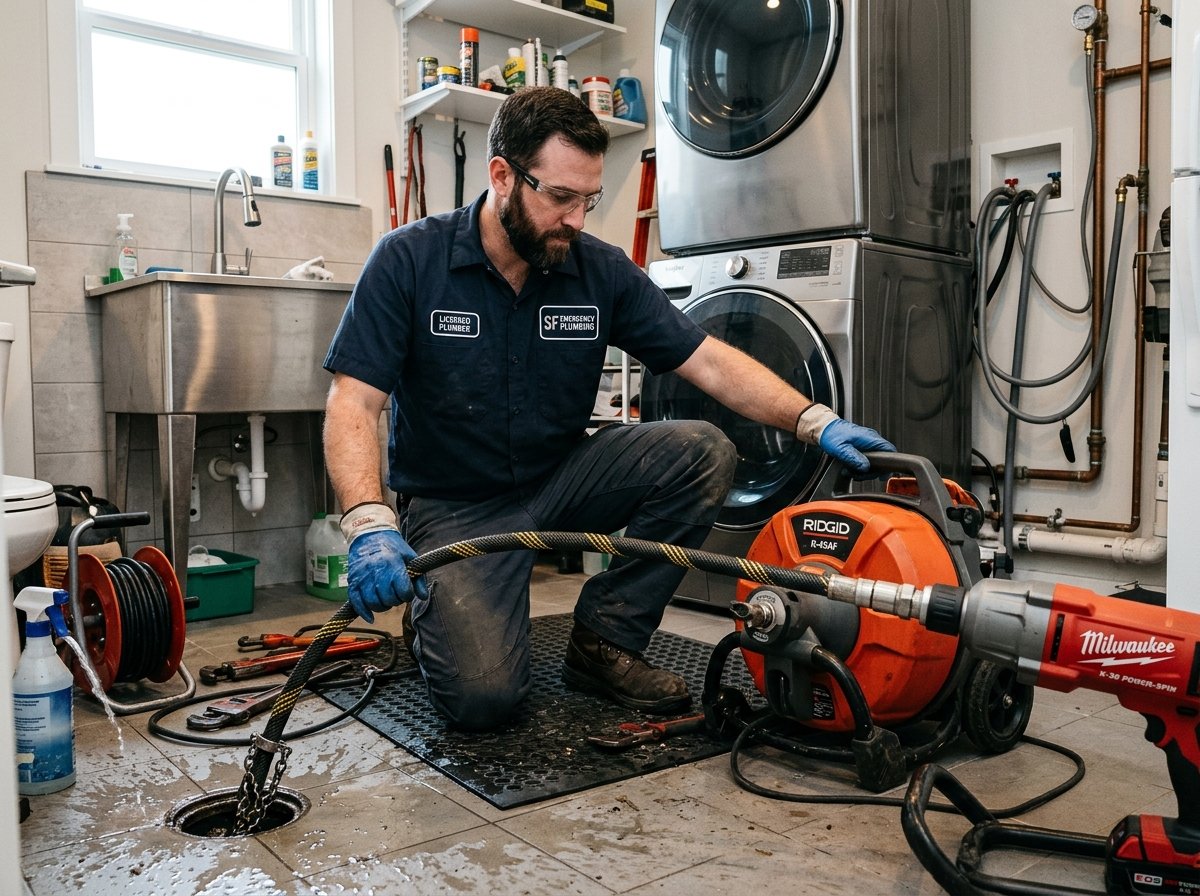
Our Norwalk drain specialists carry motorized mechanical snakes, fiber-optic diagnostic cameras, and high-pressure hydro-jetting systems to clear any blockage quickly and safely.
What NOT to Do When Your Drain Is Clogged
Certain common shortcuts can cause severe damage to your plumbing system, create personal injury risks, and drastically increase final repair expenses:
Chemical Drain Cleaner Danger
Never pour commercial liquid or crystal chemical drain cleaners into standing water. These products rely on caustic sulfuric acid or sodium hydroxide that generate intense heat (exothermic reactions). This heat softens PVC plastic pipes, corrodes vintage cast iron, and creates dangerous chemical splatters that can burn eyes and skin if a plunger is subsequently used.
- Do not mix different cleaning chemicals: Combining bleach-based cleaners with ammonia or acidic products creates toxic, lethal chloramine and chlorine gases.
- Do not use excessive brute force: Forcing a wire hanger or rigid rod down curved sink necks can scratch decorative chrome fixture linings or puncture thin brass tailpieces.
- Do not flush toilets repeatedly when backed up: If a toilet bowl is already filled near the brim, flushing again will trigger an overflow onto your bathroom floor. Always remove the tank lid and push the flapper down if water is rising.
- Do not ignore recurring slow drains: A drain that repeatedly clogs every few weeks is an early warning sign of a compromised sewer lateral, root penetration, or improper pipe slope.
How to Unclog Different Types of Drains
Because each household fixture handles different waste streams, the optimal clearing method varies:
Kitchen Sink Drains
Kitchen blockages almost always consist of congealed cooking grease and starch/coffee ground buildups in the P-trap or garbage disposal. If your kitchen sink has a garbage disposal that hums but won't spin, use an Allen wrench (hex key) in the bottom motor socket to manually free the jammed impeller before running water.
Bathroom Sinks & Vanities
Bathroom vanity clogs typically center around the mechanical pop-up stopper rod. Hair, toothpaste residue, and shaving cream wrap around the pivot rod inside the drain neck. Clearing this pivot point or cleaning the P-trap resolves over 85% of bathroom vanity blockages.
Shower & Bathtub Drains
Showers lack accessible under-floor P-traps without cutting into the ceiling below. Use a 24-inch plastic barbed drain snake (zip-it tool) fed directly through the drain grate to snag surface hair balls without disassembling hardware.
Basement Floor Drains
Floor drains in garage and utility areas sit at the lowest elevation in the building. When a floor drain begins gurgling or bubbling up wastewater during laundry cycles or toilet flushes, the blockage is in the property's main sewer line, not the individual floor drain itself.
Toilets
Toilets have an integrated porcelain siphon trapway. Never use standard sink flat plungers or wire snakes that scratch porcelain bowls. Always use a dedicated flanged toilet plunger or a rubber-sheathed toilet closet auger. For urgent toilet backups, review our guide on emergency toilet repair in Norwalk.
When Is a Clogged Drain a Plumbing Emergency?
While a single slow bathroom sink is an inconvenience that can wait for a convenient appointment, certain drainage failures represent active health and property emergencies:
- Raw Sewage Backup: Black or brown wastewater rising in basement tubs, shower pans, or floor drains.
- Multiple Fixtures Backing Up Simultaneously: Running water in the kitchen causes the laundry sink or bathtub to overflow.
- Uncontrollable Water Overflows: Water escaping over fixture rims and soaking into floorboards, drywall, or ceiling cavities.
- Pungent Sewer Gas Odors: Strong rotten-egg (hydrogen sulfide) smells entering living areas, indicating dried traps or cracked sewer stacks.
Drain Problem Decision Guide: DIY vs. Call a Plumber
Scenario B: Single drain completely blocked, DIY snake unsuccessful → Action: Schedule professional drain cleaning.
Scenario C: Multiple drains backing up, toilet bubbling, or sewage smell present → Action: Stop running all water immediately and call an emergency drain cleaning plumber.
Clogged Drain Problems in Norwalk Properties
Norwalk's historic housing stock presents unique drainage dynamics that property owners must navigate:
Many residential homes and apartment buildings in neighborhoods like the Santa Fe Springs, Bellflower, and La Mirada were plumbed with cast iron or galvanized waste stacks that have developed heavy internal scaling over 70 to 100+ years. Furthermore, Norwalk operates on a unique combined sewer system managed by the Norwalk Public Utilities Commission (Norwalk Water Division), where street stormwater runoff and domestic sewage share the same municipal collection network.
During heavy coastal winter atmospheric river storms, high city main volumes can place backpressure on older, un-trapped residential lateral connections, making professional backwater valve installation and motorized hydro-jetting essential for low-lying properties in the Downey and Downtown Norwalk.
When Should You Call a Plumber?
Contact a licensed plumbing professional when:
- Homeowner plunging and manual snaking fail to clear the blockage.
- The drain clears temporarily but clogs again within days or weeks.
- Chemical cleaners were previously poured into the line (alert your plumber before they begin work for safety).
- You suspect tree root intrusion or collapsed clay pipes in your main building sewer line.
- You need deep descaling, hydro-jetting, or a high-definition video camera sewer inspection.
What Does Professional Drain Cleaning Involve?
When an emergency plumbing technician services your drain, advanced diagnostic and cleaning technology is utilized:
- HD Video Camera Inspection: A high-definition waterproof camera is navigated through cleanouts to visually pinpoint the exact nature of the blockage (grease build-up, foreign object, cracked joint, or root mass).
- Heavy-Duty Motorized Drum Snaking: Commercial drain machines equipped with hardened cutting blades bore through thick blockages and shave internal pipe walls.
- High-Pressure Hydro Jetting: Water pressurized up to 3,500–4,000 PSI is blasted through specialized nozzles to scour mineral crust, emulsify heavy fats/grease, and restore pipes to near-original internal diameter. Learn more about our hydro jetting services in Norwalk.
- Flow Validation: All connected fixtures are operated simultaneously under high volume to verify zero standing water or backpressure.
Frequently Asked Questions About Clogged Drains
For simple bathroom sink clogs, manually pulling hair from the pop-up stopper and plunging with a flat-cup sink plunger while holding a wet cloth over the overflow hole is the quickest and safest method.
Use caution. While hot tap water can melt grease in metal kitchen pipes, boiling water should never be poured into porcelain toilet bowls (which can crack from thermal shock) or modern PVC plastic drainage assemblies, which may warp or soften glued joints.
When multiple fixtures (such as a toilet, tub, and laundry sink) back up concurrently, the blockage is located in your property's main sewer line or primary waste stack, not the individual sink branch. This requires professional sewer snaking or hydro-jetting.
Recurring clogs indicate that previous DIY attempts merely poked a small hole through a larger mass, or that your drain line suffers from severe internal rust scaling, improper slope (belly in the pipe), or tree root intrusion. A professional sewer camera inspection is recommended to identify the underlying defect.
The cost depends on the location and severity of the blockage—ranging from simple secondary branch snaking through an accessible cleanout to full mainline hydro-jetting or root cutting. A qualified plumber will evaluate the line and provide a clear quote based on the necessary equipment.
The Bottom Line
Many minor clogs can be resolved at home using basic mechanical methods like manual debris removal, correct plunging technique, or cleaning the P-trap. However, when blockages persist, affect multiple drains, or cause wastewater backup, avoiding harsh chemical cleaners and calling a licensed emergency plumber is the safest way to protect your property and restore free-flowing drainage.
Need Fast, Reliable Drain Cleaning in Norwalk?
From stubborn kitchen sink clogs to urgent main sewer line backups, our licensed emergency plumbing team provides rapid diagnostic and clearing service across all Norwalk & Gateway neighborhoods 24/7.
- Uniform Plumbing Code (IAPMO) – Drainage and Waste Disposal Standards
- Norwalk Public Utilities Commission (Norwalk Water Division) – Wastewater & Fats, Oils, and Grease (FOG) Management
- California Plumbing Code (Title 24, Part 5, Chapter 7) – Sanitary Drainage Systems